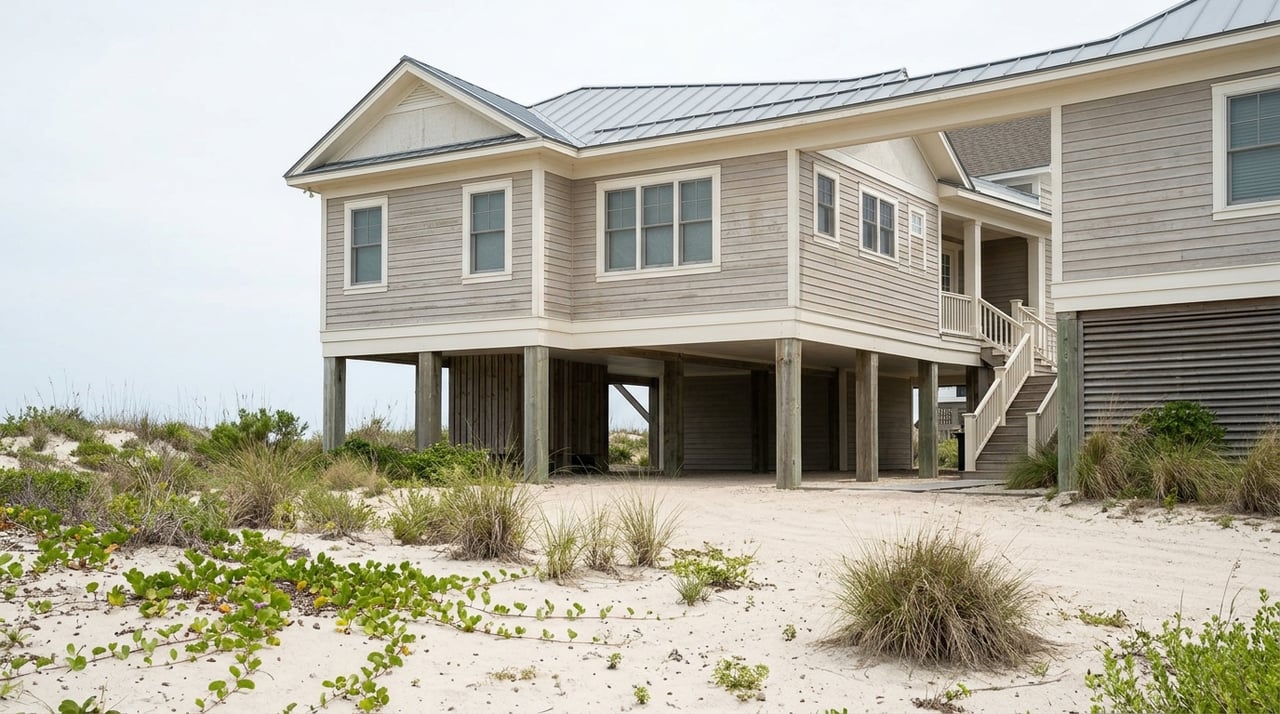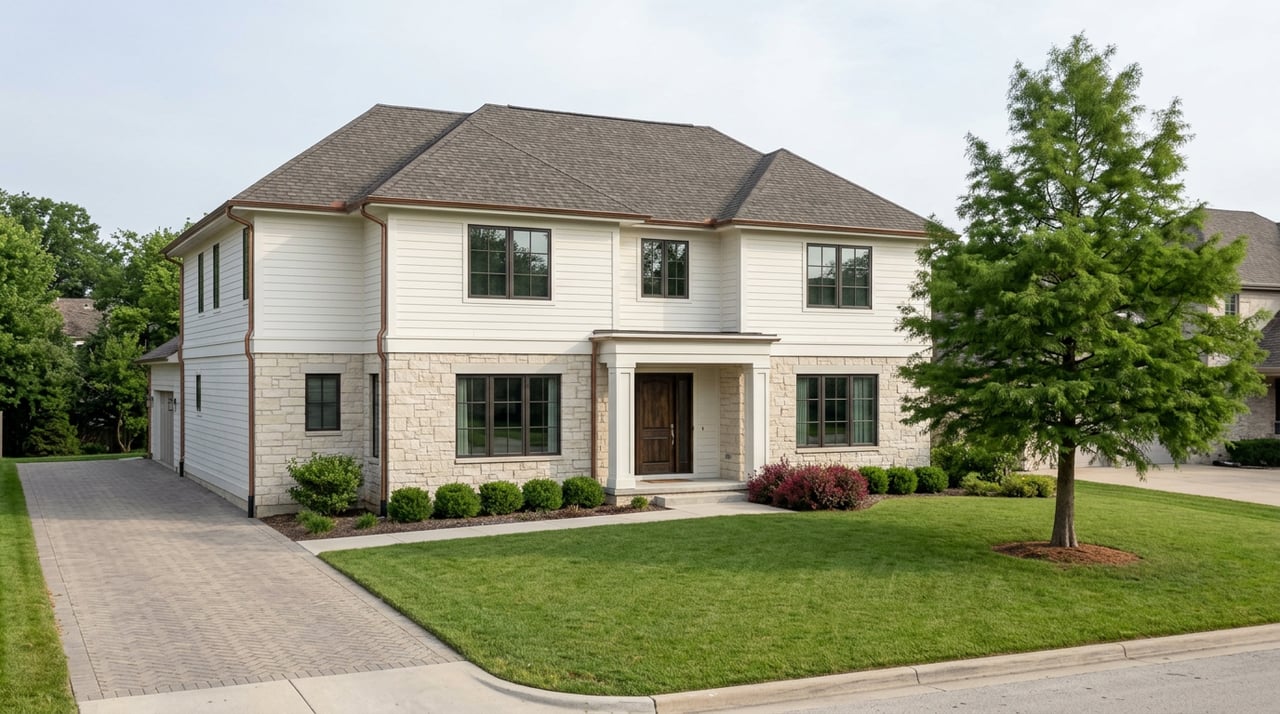
Two houses on opposite sides of Friendswood can sit in the same flood zone, carry the same square footage, and still not be the same bet. The difference isn't the creek they're closest to. It's the year on the building permit.
City Manager Morad Kabiri put a number on this in an early 2025 council update, and it's still worth sitting with if you're comparing streets rather than just prices. Of the roughly 2,700 homes that flooded during Hurricane Harvey in 2017, 95% predated 1995, the year before the city had any real detention requirements on the books. That's not a coincidence about elevation or creek proximity. It's a policy line drawn through the city's housing stock, and it explains more about where water actually collects than a FEMA flood map does on its own.
Friendswood's drainage is shaped by four creeks braiding through flat terrain: Clear Creek and its tributaries Mary's Creek, Cowards Creek, and Chigger Creek. Water moves slowly here no matter what era a house was built in. But the rules for how a subdivision handles that water changed hard around 1995, and that single fact does more work in predicting flood exposure than most of the maps buyers pull up on their phones in a driveway.
The City's Own Bond Is a List of Where the Risk Actually Sits
If you want to know which specific streets Friendswood believes are most exposed right now, you don't need a hydrology degree. You need the bond documents.
In June 2026, the city's Bond Ad Hoc Committee proposed a $50.9 million package with the largest single category, $20.34 million, going to neighborhood-level drainage work. That's a meaningful shift from the city's 2019 bond, which focused on creek terracing and regional detention rather than named subdivisions. The 2026 proposal goes street by street instead, and the line items read almost like a hit list of specific problem pockets:
| Project | Bond Allocation |
|---|---|
| Autumn Creek Neighborhood Storm Sewer Improvements | $7,106,000 |
| Falcon Ridge and Brill Storm Sewer Improvements | $6,012,000 |
| Sun Meadow New Pond Construction | $3,262,200 |
| Autumn Creek Neighborhood Combined Ponds | $1,625,000 |
| Maplewood and Westwood Storm Sewer Improvements | $1,482,000 |
| Chigger Creek Dig Out at Oak Bridge Crossing | $854,000 |
That table isn't a random spending list. It's the output of a consulting firm, Halff Associates, working through 53 initial concepts down to a handful the city could actually afford. Engineer Jason Becker, who led the analysis, told council in June that the goal was making sure every dollar invested delivers the biggest return, and that the city's risk assessment found something counterintuitive: flooded structures cluster tightly around the creeks, but roadway flooding and historical flooding trouble spots are spread across the entire city, not just the waterfront lots. The study identified 35 distinct problem areas total, with backed-up "tail water" conditions behind undersized pipes, not creek overflow, as the single most common cause.
In other words, the obvious risk map (stay away from the creek) and the actual risk map (stay aware of the pipe underneath your street and the year it was installed) are two different documents. The bond spends money on the second one.
Where the Money Isn't Going Yet
Not every flood-prone street made this round of funding. Brigadoon, a street that showed up repeatedly in older city flood reports, is still in the scoping study phase, an earlier and less certain stage than the named line items above, which already carry dollar figures and are eligible for future budget cycles rather than committed construction dates. That gap matters if you're weighing two similar homes: one in a subdivision the bond already funds, one in a neighborhood still waiting on a study to even begin.
None of this means uncertainty for one street and safety for another. Becker was direct about that too, telling council that these projects won't eliminate flood risk entirely, only concentrate spending where the data says it helps most. A funded storm sewer project reduces risk. It doesn't retire it.
The Timeline Just Moved, and That's the Part Coverage Elsewhere Will Miss
Here's where a lot of secondhand market chatter is about to be stale. As of June 2026, the plan was to put this bond in front of voters that November. By early August, Friendswood City Council walked that back. Officials decided it made more sense to push the vote to May 2027 instead, largely because the city doesn't own its own election equipment and running its own November election would cost roughly $150,000, double or triple what a shared May county election typically runs.
The package also grew in the process, now discussed around $59 million, with sidewalk funding increased from $1 million to $10 million after a transportation study flagged real gaps in pedestrian access, and a planned community center scaled back from $47 million to $16 million. For a home valued around $475,000, the tax impact under the larger package works out to about $95 a year if voters approve it.
Kabiri was candid about the tradeoff: waiting six months isn't catastrophic, but construction bids don't get cheaper while everyone waits, and anything that breaks in the meantime gets more expensive to fix later, not less. If you're timing a purchase or a sale around "the drainage bond passing," May 2027 is now the date to watch, not November 2026.
The Bigger Regional Project Runs on a Different Clock Entirely
Separate from the bond, and moving much slower, is the Friendswood Regional Stormwater Detention Basin, a joint project between the city, Galveston County, the Galveston County Consolidated Drainage District, and Harris County Flood Control District. Sited on 105 acres near FM 1959 and Blackhawk Boulevard, it's designed to hold more than 700 acre-feet of stormwater during heavy rain. The project is still in design, expected to go out for construction bids in the third quarter of 2026, with construction starting in early 2027 and completion not projected until 2029. Total cost runs around $32.5 million, split between 2018 bond funds and multi-agency partnership money.
That's a useful contrast for anyone comparing timelines. The neighborhood storm sewer fixes in the table above are relatively fast, targeted, and now tied to a spring 2027 ballot. The regional basin is a multi-year infrastructure build that won't be finished until the back half of the decade. A house near FM 1959 benefits eventually from the second project. A house in Autumn Creek or Sun Meadow benefits sooner, and more directly, from the first.
A third, separate effort is underway along the creek itself. In March 2026, the city accepted a $10 million state grant to fund Lower Clear Creek work, including Whitcomb Terracing and Bay Area Detention, a reminder that creek-focused projects haven't stopped just because the newer bond shifted its attention to neighborhood pipes and ponds.
Separately, the Deepwood Flood Control Project along Clear Creek, which involves acquiring and removing a dozen repetitive-loss homes on about five acres of floodplain, was reported nearing completion earlier this year, another sign that the city's oldest, most flood-prone lots are slowly being retired from housing stock rather than rebuilt.
What This Actually Means When You're Comparing Two Houses
None of this replaces a flood zone check or a proper inspection. But it adds a layer that a flood map alone won't give you. Before you weigh two Friendswood listings against each other, it's worth asking three things: when was the home actually built relative to 1995, is its subdivision named in the current bond's funded project list, and has the city said anything publicly about that street's drainage history. The city's own flood risk page lets you search historical FEMA maps by address, which is worth doing even for homes that look fine on today's zone lines, since a property's flood history sometimes predates the current map entirely.
A Few Questions Worth Asking Early
Does a pre-1995 build date mean a house is a bad buy? No. It means the home was built before citywide detention standards existed, which is a reason to ask more questions about drainage history and any flood mitigation work done since, not a reason to walk away.
If my subdivision isn't on the bond's funded list, does that mean it's being ignored? Not necessarily. The current bond funds a first batch of projects Halff Associates prioritized by cost-benefit. Areas like Brigadoon are still in earlier scoping stages and could see funding in future budget cycles.
When will I know if the bond actually passes? The vote is now expected in May 2027 rather than November 2026, following the city council's August 2026 decision to delay for cost and construction-bid reasons.
Friendswood's flood story isn't only about the creeks. It's about which decade a street was built in, and which line items the city has already decided to fund. Those two facts together tell you more than any single flood zone lookup will.
If you're weighing neighborhoods in Friendswood or anywhere else on the mainland side of the market, Norma Smalley can walk through what a specific street's history and timeline actually mean for your search. Let's Connect.