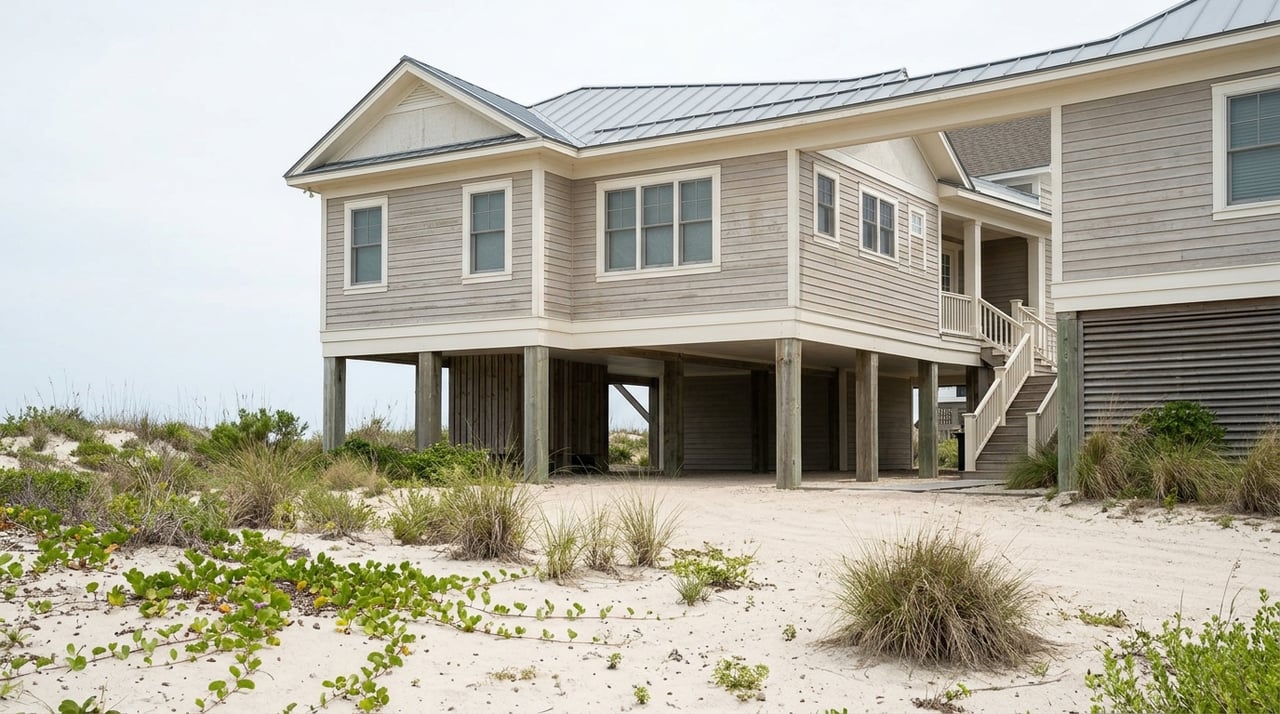
Two homes on Bolivar Peninsula can sit a block apart, list for the same price, and close on completely different timelines, and the difference usually has nothing to do with the offer, the inspection, or even the buyer's financing. One factor can be whether the seller has a windstorm Certificate of Compliance, known on the peninsula and across the Texas coast as a WPI-8, or needs to use an alternative path.
Most buyers price in flood risk. Most sellers price in a roof's age. Almost nobody prices in whether the certificate proving that roof meets windstorm code is sitting in a file somewhere, or was never issued at all. On Bolivar Peninsula, where a large share of the housing stock was rebuilt in the years after Hurricane Ike, that gap shows up at the title company far more often than either side expects.
What a WPI-8 Actually Proves
The Texas Windstorm Insurance Association is the coverage of last resort for wind and hail in the state's coastal counties, and it generally requires proof that a structure meets windstorm building code. That proof is the Certificate of Compliance, and the certificate requirement is not simply a lender preference or an underwriting suggestion. Without a current certificate, a property in the designated catastrophe area may still qualify for TWIA coverage through an exception or waiver.
The certificate comes in a few forms depending on when the work happened, and knowing which one applies to a given house matters more than most sellers realize:
| Certificate | Issued by | Applies to | What it means for a seller |
|---|---|---|---|
| WPI-8 | Texas Department of Insurance | New construction or improvements still in progress | |
| WPI-8-E | TDI, since June 1, 2020 | Completed improvements, certified after the fact | The version most sellers of an already-built home will need to produce |
| WPI-8-C | TWIA, only for work completed January 2017 through May 2020 | Completed improvements finished in that narrow window | A dead end for anything built outside that narrow window |
If a seller cannot locate the right certificate, the fix is not automatic. It usually means an inspection of the completed structure, which typically runs $250 to $600 depending on the size of the home and how many inspection stages it takes to document.
Where the Peninsula's Housing Stock Runs Into This
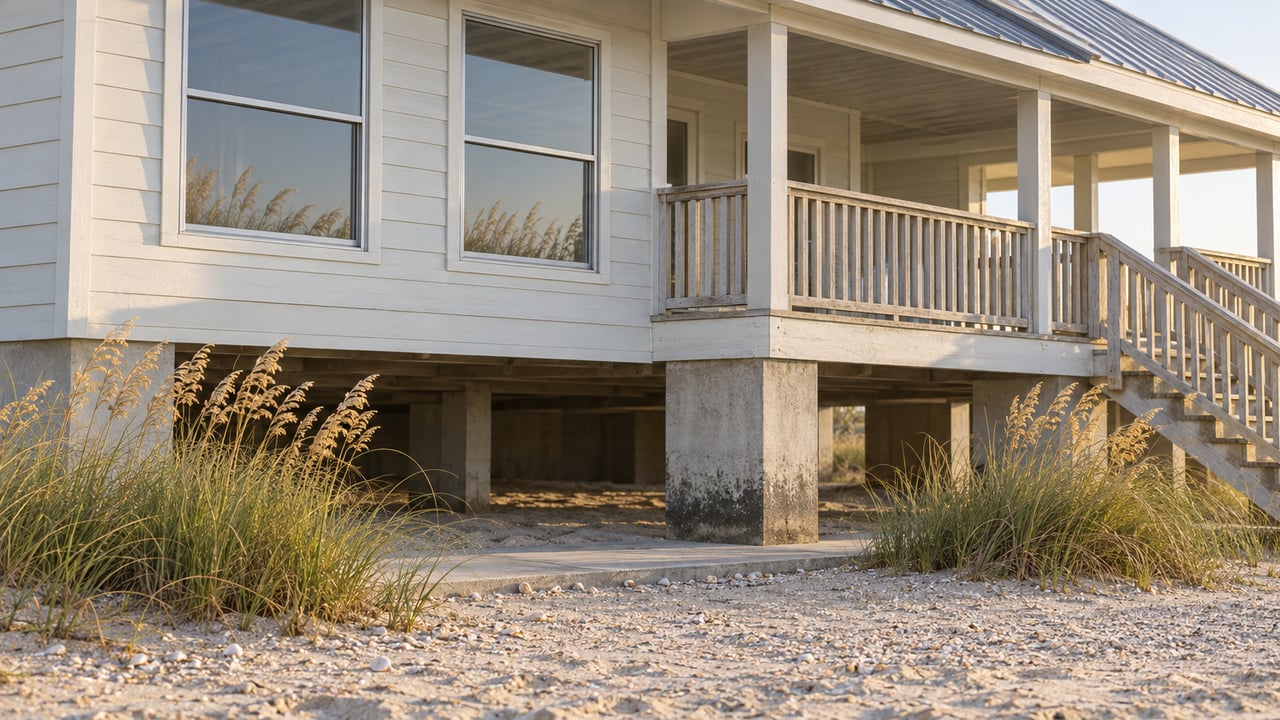
Hurricane Ike put a storm surge of roughly 16 feet across Bolivar Peninsula, according to testimony given to the Texas Senate, and destroyed or badly damaged most of the structures on it. Everything rebuilt after that had to meet updated FEMA elevation standards and TWIA windstorm requirements at the same time, on a compressed timeline, often through multiple contractors.
That combination created a documentation problem that outlasted the rebuild itself. A public-adjusting firm that works storm claims across the peninsula, Dependable Claims Specialists, has noted that when Hurricane Harvey hit in 2017, TWIA claims on peninsula homes rebuilt after Ike frequently surfaced documentation gaps from that original reconstruction, gaps that complicated how the claims got paid nearly a decade later. If a paperwork gap can resurface during a claim, it can just as easily resurface during a title search, and it usually does at the least convenient moment: after a contract is signed, when a lender's underwriter asks for proof of windstorm eligibility and the seller has to go looking for a document that may never have been filed correctly in the first place.
The Two Ways Around a Missing Certificate, and What Each One Costs
State law does not leave every uncertified home locked out of coverage. There are two paths, and they are not the same:
- The 1988 to 2009 exception. Residential properties built between 1988 and June 18, 2009 that were never certified can still qualify for TWIA coverage, but the policy carries a 15 percent surcharge on top of the regular premium.
- The WPI-8 waiver. T Bar Pro says a homeowner without any certificate at all can apply for a waiver that allows TWIA coverage anyway, at a 5 percent surcharge, but the property loses eligibility for the building-code credits that would otherwise lower the rate.
Both routes keep a sale alive. Neither one is free, and a buyer's lender may still ask questions a seller can't answer quickly, which is exactly the kind of friction that turns a 30-day closing into a 60- or 90-day one while an inspection gets scheduled and paperwork gets sourced from the Texas Department of Insurance's records.
Why April 1, 2026 Changes the Math Going Forward
TDI adopted new windstorm construction standards based on the 2024 International Residential Code and International Building Code, and as of April 1, 2026, any new construction, repair, or addition in the designated catastrophe area has to be certified under those codes to qualify for TWIA coverage. Work that began before that date, going back to September 1, 2020, is still evaluated under the 2018 codes.
This matters most for anyone on the peninsula planning a renovation large enough to trigger a fresh inspection. Canopy Insurance Texas says renovations exceeding 30 percent of a home's insured value already require a new WPI-8 for the renovated portion. That new inspection has to meet a newer, more current code than a renovation that started even a year earlier. But anyone who has pulled permits for a major addition or a full re-roof since this past April is working under a different rulebook than a neighbor who started the same project the year before.
What This Actually Costs, Beyond the Paperwork
None of this happens in a vacuum from the premium itself. TWIA's own reporting puts the average residential premium at roughly $2,541 a year as of mid-2026, and the association's board has held residential rates flat for 2026 with its rate-adequacy committee recommending the same for 2027. According to Latent Insure, the current residential coverage cap sits at $1,773,000.
None of that is new information to anyone who has shopped insurance on the coast before. What is easy to miss is that the premium is the cost of having coverage. The certificate—or an available exception or waiver—is what establishes eligibility for it in the first place, and eligibility problems don't show up on a quote. They show up in the middle of a transaction, usually from the lender's side, usually with a deadline attached.
What to Do About It Before You're Under Contract
- If you're selling, pull your certificate status from TDI's database before you list, not after an offer comes in.
- If your home was built or rebuilt between 1988 and 2009 and was never certified, know that the 15 percent surcharge path exists so you can quote it accurately to a buyer instead of discovering it during underwriting.
- If you're buying an older home on the peninsula, ask for the certificate documentation as part of your due diligence, not as a closing-week scramble.
- If you're planning a renovation this year, budget your inspection and permitting process around the 2024 code requirements that took effect this past April, since any new work now falls under the newer standard.
The certificate rarely changes whether a home is a good buy. It changes how fast the deal moves and how many surprises show up along the way, and on a peninsula where so much of the housing stock carries a rebuild history, that is worth knowing before you write or accept an offer, not after.
A Few Questions Worth Asking Early
Does every home on Bolivar Peninsula need a WPI-8 to sell? No. A home can still sell and still get TWIA coverage without one, through the 1988 to 2009 exception or the waiver process, but both carry a surcharge and neither happens overnight.
My home was rebuilt after Ike and I can't find any certificate. Now what? Start with TDI's online database, since certificates issued since June 2020 are searchable there.
Does the April 1, 2026 code change affect a certificate I already have? No. It applies only to construction, repairs, or additions that begin on or after that date.
If you're weighing a purchase or a listing on Bolivar Peninsula and want to know where a specific property stands before you're locked into a timeline, Norma Smalley has spent 20-plus years working exactly this kind of coastal detail into a smooth closing. Let's Connect and figure out what your certificate situation actually looks like, before it becomes a surprise.
This article is general information, not legal, tax or financial advice. Consult a qualified professional about your situation.