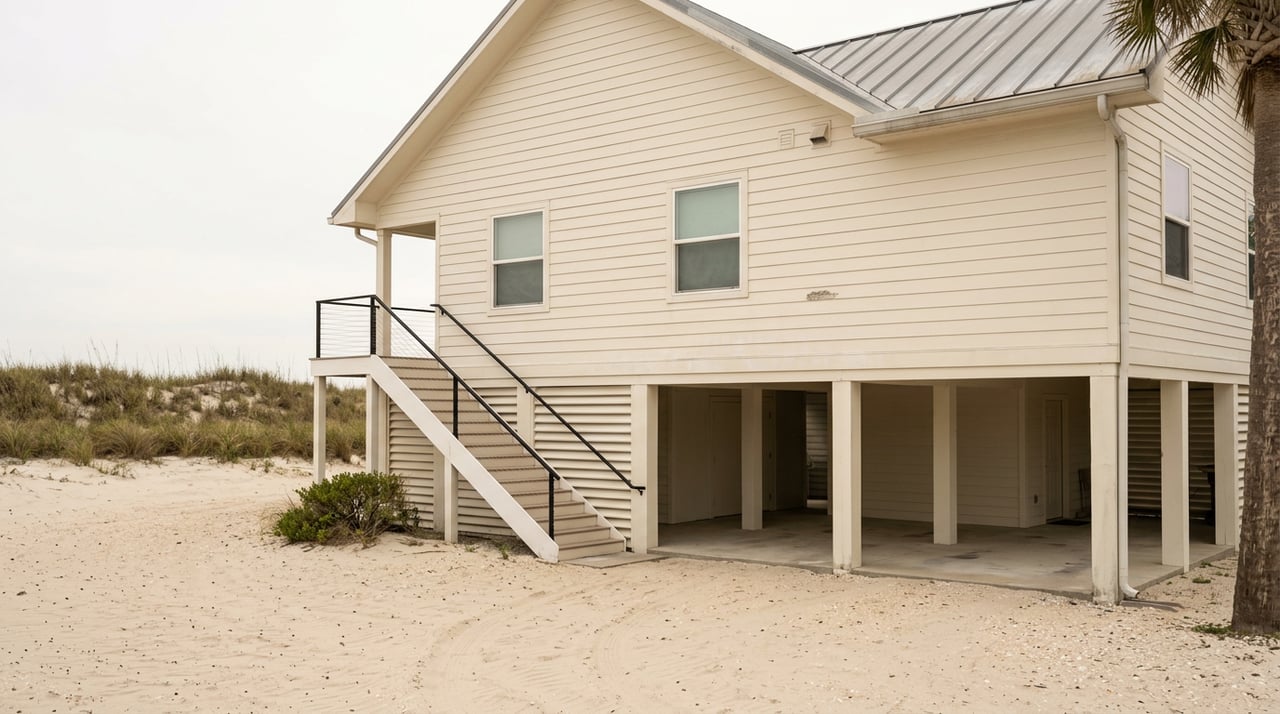
By early September the crowds thin, the beach permits stop selling as fast, and the peninsula settles into the season most residents quietly prefer. What used to be a good stretch of quiet mornings has, as of this year, become something more durable. On January 15, 2026, Houston Audubon closed the final purchase in its Save Bolivar campaign, and the Bolivar Flats Shorebird Sanctuary is now protected end to end.
That is the fact. The interesting part is what it does to a fall weekend if you already live here.
What Actually Changed on January 15
Bolivar Flats was never unprotected in the abstract sense. It carried the highest global designation the birding world hands out, and it has been managed by Houston Audubon for years. What it lacked was a guarantee that the last unowned pieces would not be sold to a developer. The nonprofit finalized the purchase of a nearly 53-acre parcel on Jan. 15 for $3 million, completing a years-long effort to safeguard the Flats, a 1,301-acre site, from planned development. The acquisition locks in permanent protection for one of the upper Texas coast's most critical bird habitats.
For a resident, the practical translation is simple. The tidal complex at the base of the North Jetty, the mudflats, the salt marsh behind them, the low dune line, and the walking approach from Rettilon Road are not going to change hands. Houston Audubon has also confirmed that the sanctuary will be a stop on the Bolivar Peninsula Nature Trail coming 2027, which means signage, wayfinding, and interpretation are on the way. The infrastructure supporting a fall morning here is no longer provisional. It is being built out.
The Weekend Loop, West to East
The peninsula reads as one long strip on a map, but the birding day works better as a sequence than a single stop. A west-to-east loop, timed to a low tide in the morning, moves through four distinct habitats without doubling back.
- Bolivar Flats via Rettilon Road. Park at the vehicular barrier and walk. The sands at Bolivar Flats are tightly packed and easy to walk on, requiring no special footwear. If venturing into the saltmarshes behind the beach, you may need to wade through water, and should anticipate walking through soft mud.
- The North Jetty at 17th Street. Turn right on 17th St. to the North Jetty. A walk along the jetty at low tide will offer good looks at many of the birds feeding on Bolivar Flats. This is where you get the second angle on the same tidal pool.
- Rollover Pass and Yacht Basin Road. Rollover Pass is a man-made channel across Bolivar Peninsula, and this "fish cut" has caused the formation of an extensive tidal flat on the bay side of the peninsula. At low tide, tens of thousands of shorebirds, gulls, and terns will feed and roost here.
- High Island. Smith Oaks and Boy Scout Woods, at the far east end, are a different ecosystem entirely.
You can do the whole loop before lunch if the tide cooperates. You can also stretch it across two mornings and use the middle of the day for coffee and errands, which is what most people who live here actually do.
What Low Tide Actually Shows You
The Flats are not a scenic overlook. They are a working feeding ground, and the cast changes with the season. Fall and winter bring the biggest numbers, and the species list is specific enough to be worth carrying with you.
- Piping Plover and Snowy Plover. Of particular significance are the large numbers of endangered Piping Plovers and threatened Snowy Plovers that use this area as a migratory stopover and wintering location.
- American Avocet in flocks of thousands. Several thousand American Avocets spend the winter on the flats, joined by dozens of Piping Plovers.
- Reddish Egret and Roseate Spoonbill. Bolivar Flats is also an important feeding area for wading birds including Reddish Egrets and Roseate Spoonbills.
- Peregrine Falcon on the hunt. Peregrine Falcons frequently stoop on the shorebird flocks out on the flats. If you have ever wondered what makes a flock of avocets rise at once, this is the answer.
- Whimbrel and Long-billed Curlew. Whimbrels and Long-billed Curlews are often seen on the sand flats in migration.
The scale to hold in your head: the site provides migratory stopover and wintering habitat for 100,000 shorebirds or more, and over forty species of shorebirds have been recorded. Set against a single morning walk, those numbers land differently than they do on a website.
The East End Deserves Its Own Morning
Smith Oaks and Boy Scout Woods are famous for spring, when the Gulf-crossing songbirds fall out of the sky exhausted. Fall is quieter and, for a resident, better. The rookery is not staging its March-to-May peak, but the pond and the woods are still working.
Smith Oaks is the largest sanctuary and is home to the Rookery, an island in the middle of Claybottom Pond. It's said there's no better place in Texas to observe the home lives of colonial waterbirds than the Rookery. Snowy egrets, spoonbills, herons, white ibis and more can be observed there, as well as alligators laying in wait for hapless chicks at the edge of the pond. The dramatic show comes an hour or so before sunset as birds pour in from all over to roost for the night.
If you have out-of-town guests in October or November, the sunset roost at Claybottom Pond is a stronger closing act than a restaurant reservation.
The 80,000-Goose Postscript
The birding season on Bolivar does not end at the peninsula. Twenty minutes north sits Anahuac National Wildlife Refuge, and its calendar is worth knowing if you live within driving distance.
The refuge covers 34,000 acres of meandering bayous and coastal marshland. Between October and March huge flocks of geese, sometimes in excess of 80,000 at a time, stop to feed in the rice fields of the refuge. That is not a metaphor. It is a wall of sound at dawn, and the peak overlaps almost perfectly with the months when Bolivar itself is at its most residential.
Practical Notes Residents Forget
Even people who have lived here for years lose track of a few things between seasons.
- A Galveston County beach sticker is required to park on Bolivar beaches, including the drive down Rettilon Road to the vehicular barrier. Buy one before you go if yours has expired.
- Time it to the tide. Low tide is when birds feed. A rising tide pushes them off the flats and into the marsh, where they are harder to see.
- There is no shade. There is no tree cover, and in all seasons the area can become very hot. Even in October the middle of the day is unforgiving.
- Leave the dog at home. The sanctuary rules are strict about it, and the ground-nesting species are the reason.
The Slow Version of a Bolivar Fall
The tourism office has spent the year leaning into this. Birding On Bolivar 2026 is an 11-week series featuring 12 to 13 exclusive episodes highlighting birding locations on the Upper Texas Coast. The series is a signal, not a coincidence. The peninsula is quietly repositioning fall and winter as the season worth traveling for, and the January land purchase gave the story its anchor.
If you live here, the payoff is longer than a weekend. Between the Flats being permanently protected, the Nature Trail scheduled for 2027, and the winter goose season at Anahuac starting in October, the four months from September through December now hold a routine that does not depend on a summer crowd to feel full. A morning at the jetty, a coffee stop at Dannay's Donuts, a plate of tacos from Taqueria el Antojito, a late lunch at Stingaree or Tia Juanita's, and back on the road east before the roost. That is a resident's day, and there are more of them ahead than there were a year ago.
If you own a home on the peninsula and want to talk through how the shift toward year-round use is shaping value, or you are thinking about what a second home here would look like in the quieter months, Norma Smalley is glad to help. Let's Connect.